








Faraday Bag for Phone, Laptop & Tablet | Signal Blocking Bag
- ✔ Lab-tested, IEEE 299-2006
- ✔ Blocks WiFi, 5G, GPS, Bluetooth & NFC
- ✔ Designed in the Netherlands
Tax included. Shipping calculated at checkout
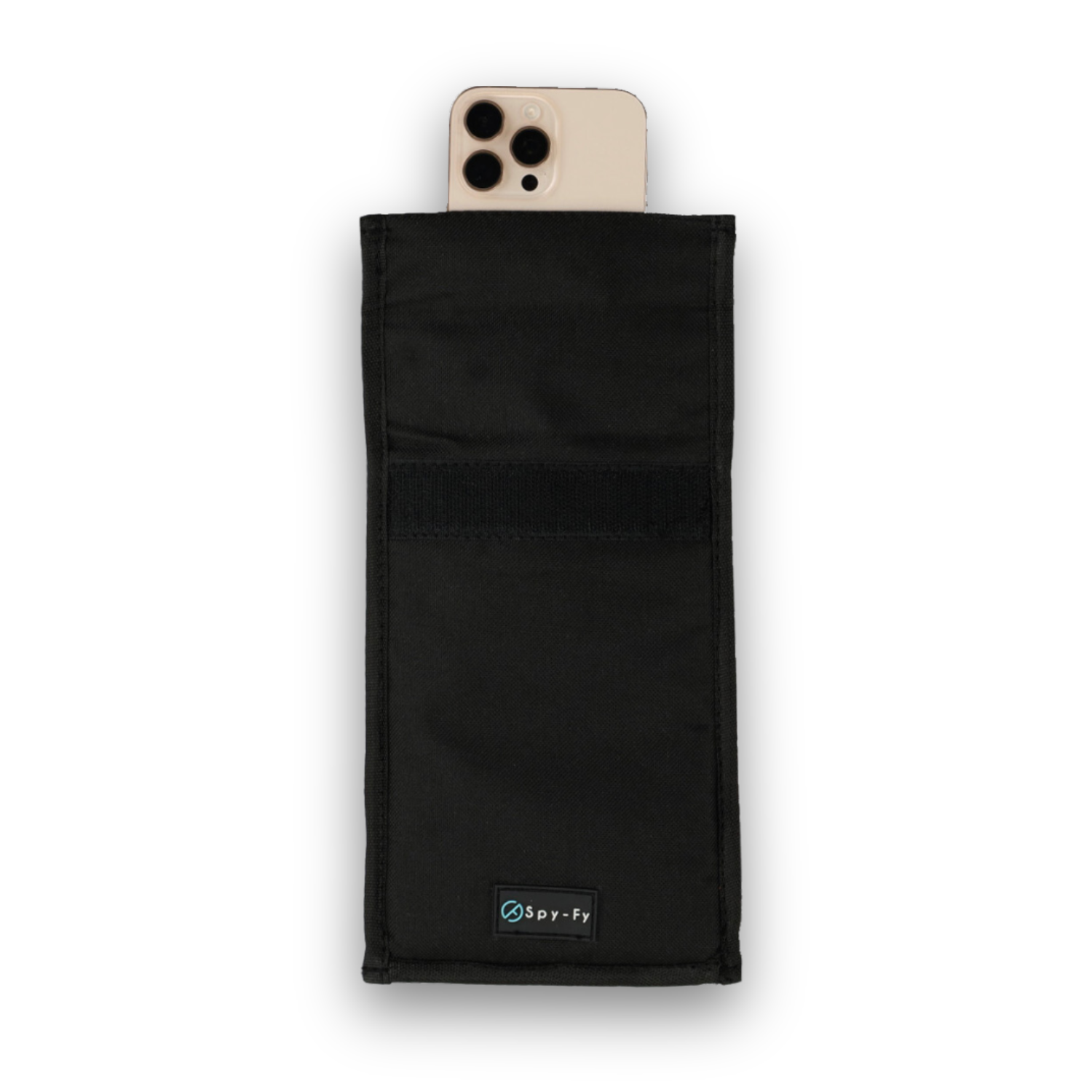
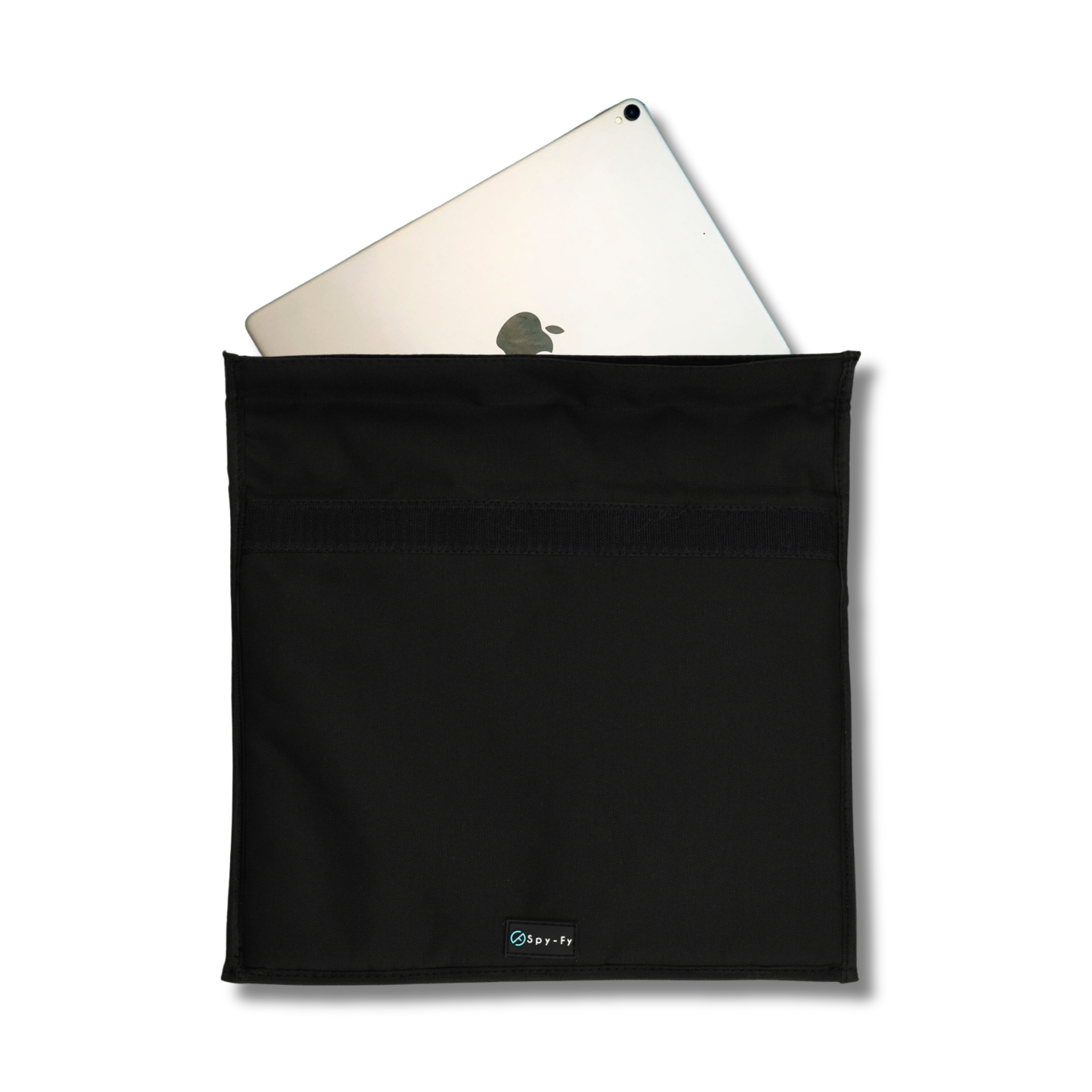
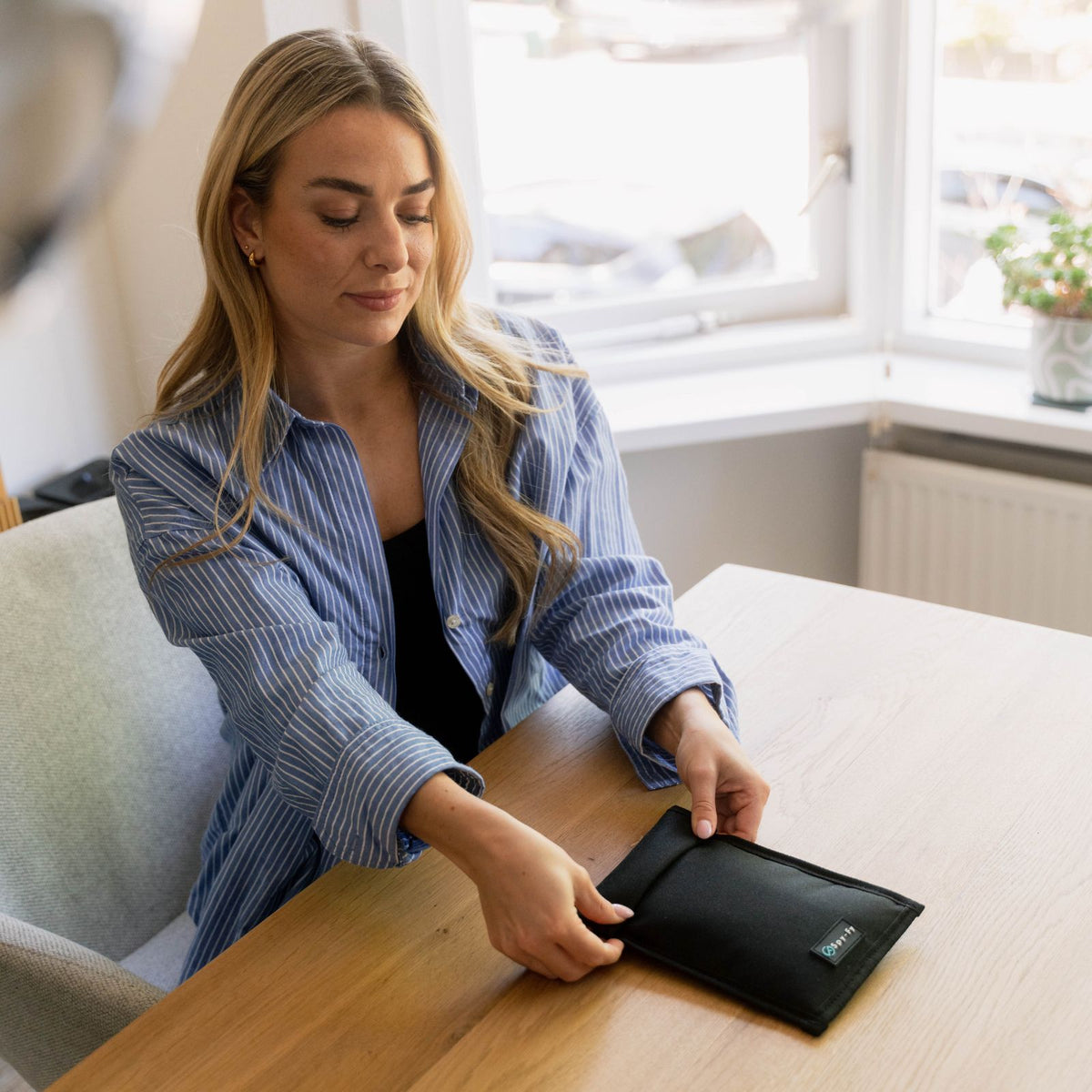
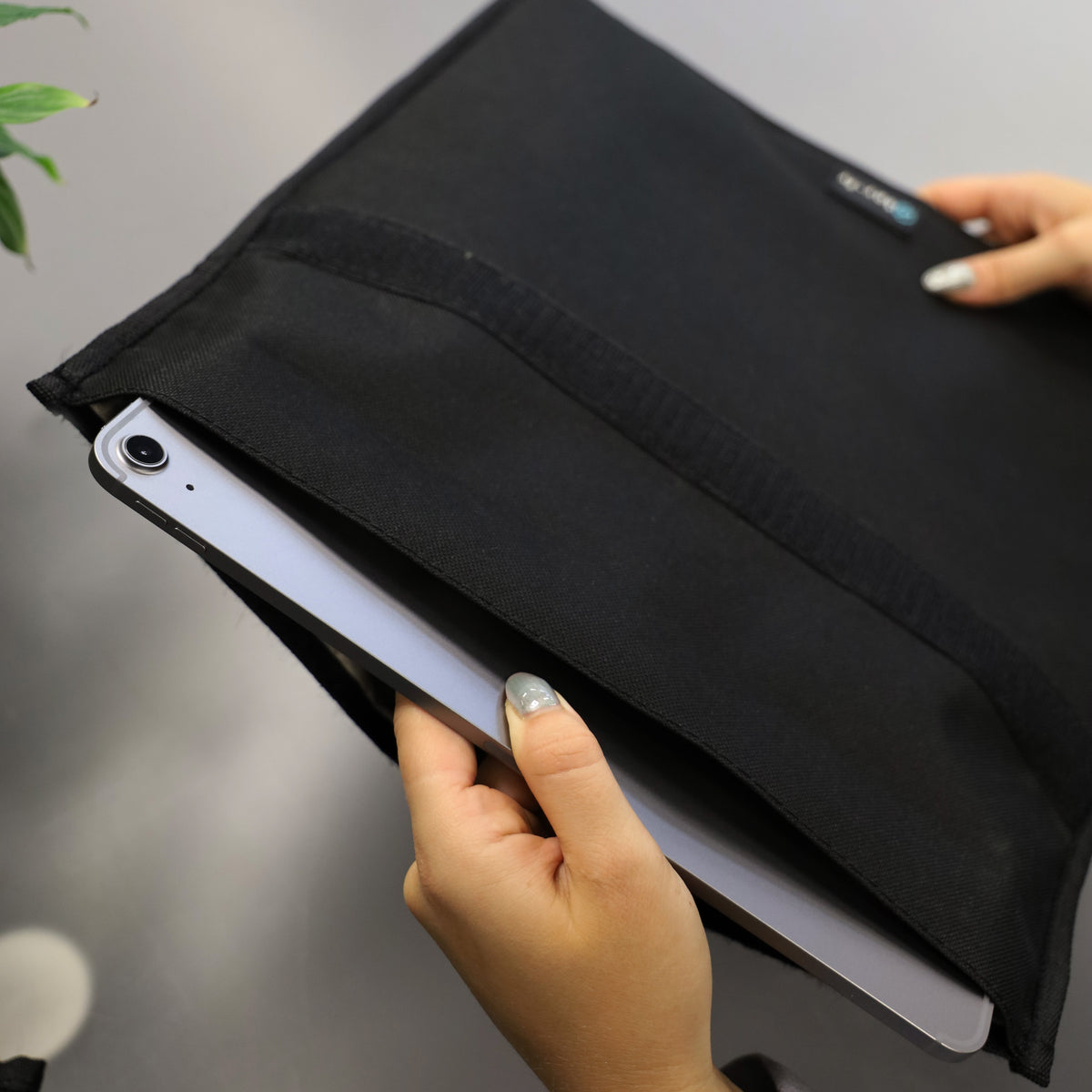
Put your phone, tablet or laptop inside, fold the flap twice, and it is off the grid. Nothing to configure, nothing that software can switch back on. Lab-tested by Applus+ Keystone (ISO/IEC 17025) according to IEEE 299-2006: average 70 dB attenuation across the frequencies phones use, roughly one ten-millionth of the signal.
Three sizes, one material. Designed in the Netherlands, produced with our Dutch manufacturing partner. Used by government, forensic and corporate teams.
Specifications
Sizes: Phone 12 x 19 cm (4.7 x 7.5 in) | Tablet 33 x 25 cm (13 x 9.8 in) | Laptop 39.5 x 26 cm (15.6 x 10.2 in)
Colour: Black
Material: 600D polyester outer, three-layer shielding liner
Closure: Double fold-over with hook-and-loop
Average attenuation (30 MHz to 6 GHz): Phone 69 dB | Tablet 69 dB | Laptop 76 dB
Tested: Applus+ Keystone (ISO/IEC 17025), IEEE 299-2006, 30 MHz to 40 GHz. Report available on request.
Blocks: WiFi (2.4 and 5 GHz), 2G to 5G, LTE, GPS and other satellite navigation, Bluetooth, RFID/NFC from 13.56 MHz
Does not block: 125 kHz low-frequency RFID, sound
Brand: Spy-Fy, the Netherlands
FAQ
What is a Faraday bag?
A Faraday bag is a pouch or bag made from conductive materials that block electromagnetic fields. This prevents signals such as WiFi, Bluetooth, cellular, and GPS from reaching the devices inside, protecting them from tracking and hacking.
How to make a Faraday bag?
While it's possible to make a Faraday bag at home using materials like aluminum foil and conductive fabrics, it is recommended to purchase a professionally made Faraday bag for reliable and effective signal blocking, like the Spy-Fy Smartphone Faraday Bag.
Do Faraday bags work?
Yes, if they are built and closed properly. Ours were tested by an ISO/IEC 17025 lab according to IEEE 299-2006 and average 70 dB attenuation across the frequencies phones use (30 MHz to 6 GHz), roughly one ten-millionth of the signal. The opening is where most bags fail, which is why ours closes with a double fold. You can check it yourself: phone in, bag closed, call it.
Faraday bags for phones and other products
Faraday bags work for anything that communicates over radio: phones, tablets, laptops, car key fobs, payment cards and passports. They do not block sound, and they do not block 125 kHz low-frequency RFID used in some older access badges.
Best Faraday bag for phone
The best Faraday bag is the one that has been measured and tells you where it stands. The Spy-Fy phone bag averages 69 dB across 30 MHz to 6 GHz, tested by Applus+ Keystone, and we publish what it does not do. Compare that with a single peak number from a favourable band, which is what most bags quote.
Why do Faraday bags stop working?
Faraday bags can stop working if the conductive materials become damaged or worn out. It's important to regularly inspect the bag for any signs of wear and tear and to replace it if it no longer effectively blocks signals. The quickest check is the call test: if a call gets through, replace the bag.
Does it block my payment card or passport?
Yes. Those use 13.56 MHz NFC with a range of a few centimetres, and the bag blocks it. Older 125 kHz access badges are not blocked: low-frequency magnetic fields pass through any textile, and that applies to every Faraday bag on the market.
Can someone still listen through the microphone?
Yes. The bag blocks radio, not sound. If listening is the concern, switch the device off or leave it in another room.
Is it EMP-proof?
We have not tested it for EMP, so we do not claim it.